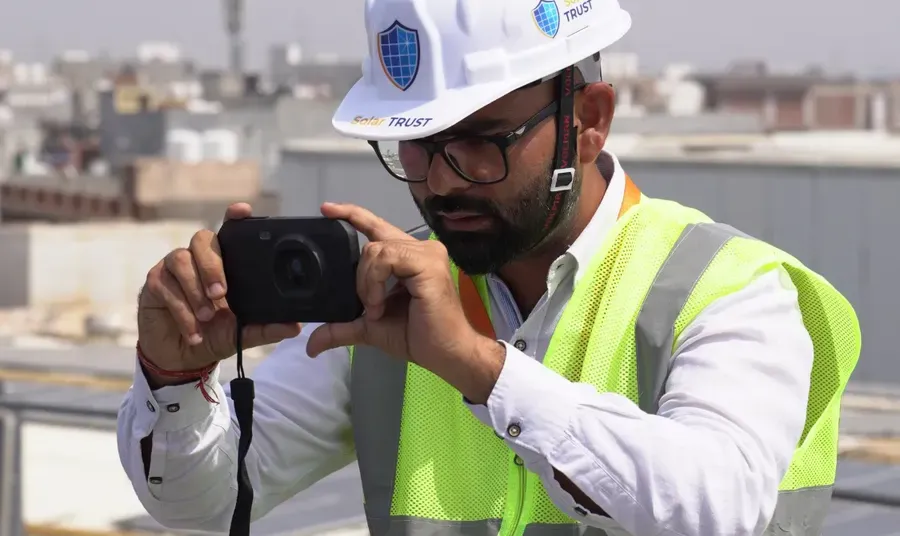
[PLACEHOLDER — replace] Intro paragraph: explain how hotspots form on aging arrays and why thermography is the fastest way to find them before permanent damage.
How hotspots form
[PLACEHOLDER — replace] Describe cell mismatch, failing bypass diodes, and shading that produce localized heating and burn damage.
What thermography reveals
[PLACEHOLDER — replace] Explain how aerial or ground-based IR scans surface temperature anomalies invisible to the naked eye.
Repair before it’s irreversible
[PLACEHOLDER — replace] Outline the remediation path — diode replacement, module swaps, string rewiring — before localized damage becomes a fire or yield risk.
- Scan the full array — [PLACEHOLDER — replace] Capture a complete IR map to rank anomalies by severity.
- Triage the worst cells — [PLACEHOLDER — replace] Prioritize hotspots showing the largest temperature delta.
- Replace diodes and modules — [PLACEHOLDER — replace] Swap failed components before they cascade.
[PLACEHOLDER — replace] A pull-quote on catching hotspots before irreversible burn damage.